Thursday, January 24, 2013

Buckle and stress: The different types of fracture


Image Source: besthealthbenefits.info


Most people assume that a bone “fracture” is an injury less severe than a bone “break.” In fact, bone “breaks” and “fractures” are one and the same. The term “break” or “broken” is simply not an orthopedically accepted for describing damage to bones. Bone fractures are not limited to people with active lifestyles– even celebrities break their bones.


A bone can be fractured in several ways. Determining what kind of fracture has occurred helps set the bone for recovery. In diagnosing a fractured bone, doctors first check if the fracture is simple or compound. A simple fracture, also known as a closed fracture, is a bone fracture where the skin remains intact. Although simple fractures cause severe pain, they are sometimes mistaken for other types of injury because the broken bone remains concealed. When the broken bone penetrates the skin, it is a compound or open fracture. Open fractures put a patient at a higher risk of infection.


Image Source: ceessentials.net


Whether simple or compound, fractures are further classified into types. These are the most common:


• A greenstick fracture is an incomplete fracture. The bone is bent rather than broken off. This is most common among children as their bones are strong yet flexible. An adult would likely have more brittle bones which would snap instead of bend.


• A transverse fracture is a fracture that puts a bone at a right angle to its axis.


• A comminuted fracture is when the fractured bone fragments into several pieces. An open comminuted fracture is slightly more dangerous than other types of breaks as scattered fragments take longer to heal and, as such, are exposed to the risk of infection for a longer time.


Image Source: physicsworld.com


Bone fractures should not be taken lightly. Leaving a fractured bone untreated can result in myriad complications, including infection and paralysis.


Recommendations for exercises and stretches to strengthen bones come from expert like Norman K. Poppen, M.D.  Visit this website for such details.

Friday, December 21, 2012

Avoiding arm casts this winter

Image Credit: geniusbeauty.com


Many cases of injury originate from attempts to have fun. In winter, many people seek to take full advantage of the holidays and the snow, and engage in activities that sometimes leave them with several broken bones. If wearing an arm cast is not your idea of celebrating the Yuletide season, try these tips.


Warm up

Cold temperatures can leave the muscles in a state that is more prone to injury. It is best to take a few warm-up exercises especially if you are engaging in strenuous activities. For instance, you can take a few warm-up runs before skiing in new terrains.


Image Credit: runnersvoice.org


Know the terrain

Keep track of rocks, roots, fences, ridges, and others. Knowing where obstacles are can help you avoid them and the possibility of being injured because of them. Moreover, navigating through snowy ground poses certain difficulties; it is best for you to stay in marked trails. Ice is slippery, so staying in areas such as steep slopes and inclines is the beginning of injury.


Be properly equipped

Make sure to wear the proper equipment or attire. When walking in snowy or icy ground, use shoes with lots of tread as these offer more grip and minimizes the risk of slips. Wear several layers of loose garments. This can protect you from the cold and offers you the convenience of removing or adding layers depending on the need.


Image Credit: ahikingblog.com

You gain nothing from being overly complacent in winter—except scratches and broken bones. Doctors can treat fractures, but no one can return the winter holidays you lost because of broken limbs.

Norman K. Poppen, MD, is a recognized expert in the surgical treatment of musculoskeletal problems. Visit this Facebook page to learn more about him.

Thursday, November 22, 2012

Obama's Thanksgiving message

"Fight the overwhelming urge to take a nap...at least until AFTER dinner," and other pieces of Thanksgiving advice from President Obama. 


Monday, November 12, 2012

Soft but tough: Norman K. Poppen, MD, and the body's cartilage

The cartilage is not as tough as the bone, but it is no softie either. Orthopedist Norman K. Poppen, MD, is familiar with the cartilage and how it allows the entire skeletal system to perform some of its most important functions.

Norman K. Poppen. Image credit: altunderground.com

The cartilage is a connective tissue found in many areas in the human body, particularly in joints, in the rib cage, the ears, nose, ankle, knees, bronchial tubes, and in the intervertebral discs. It is quite common among other animals, particularly in cartilaginous fishes like sharks, rays, and sawfishes. It is naturally flexible, but is stiffer than muscles, and is not as rigid as bones.

Norman K. Poppen. Image credit: diabeteshypertension.com

The primary function of the cartilage is to provide support to various organs of the body without being as hard as bones. Experts like Norman K. Poppen, MD, note that the relative softness of the cartilage makes it an excellent cushion for bone joints. This means that the tissue plays a vital role in the smooth movement of the human body.

Norman K. Poppen. Image credit: health.rush.edu

Among connective tissues, the cartilage is the slowest to grow and be repaired. Needless to say, damage or complications can lead to serious problems. The gradual thinning of the cartilage can cause joint pains when moving, and is the underlying cause of arthritis. In the case of chondrodystrophies, the cartilage in the joints is ossified and is transformed into bone, causing symptoms roughly similar to those in arthritis.

Every component of a bodily system performs a specific function vital to the whole. The same is true for the cartilage. It may not be as tough as bones, but without it, the skeletal system would never be the same.

More information about Norman K. Poppen, MD, is available in this Facebook page.

Yoga and stretching can help relieve bad backs

Here's an interesting article from Time Health & Family about how yoga can help relieve back pain. This article echoes the message of a previous Norman K. Poppen, MD, blog post that discussed asanas for back pains.


Chanting “om” might help ease your aching back, but only if it comes at the end of yoga practice. A new study finds that the physical act of doing yoga — but not its meditative aspect — may help reduce symptoms of chronic back pain.

Based on smaller previous studies, researchers thought it was some combination of yoga’s stretching and mental elements — deep breathing and relaxation — that improved back sufferers’ function. But the current study found that yoga worked no better than intensive stretching alone, suggesting that it’s the physical exercise, not the mindfulness component, that matters.

Whether doing yoga or stretching, however, it takes effort: participants in the study attended weekly 75-minute yoga or stretching classes for 12 weeks, and did additional 20-minute at-home practices with the help of instructional CDs or DVDs at least three days a week.

The trial, published on Monday in the Archives of Internal Medicine, is the largest to date on yoga and chronic back pain, a condition that affects millions of adults and often doesn’t have an easy solution. People spend billions of dollars a year seeking relief from pills, doctors, physical therapists and chiropractors. Although there’s no shortage of available treatments for low back pain, including exercise, it’s not entirely clear how they stack up against one another in terms of effectiveness.

For the new study, researchers recruited 228 adults in the Seattle area, all of whom had moderate chronic back pain but were fairly active despite their conditions. The participants were randomly assigned to do either yoga or intensive stretching or, as the control group, to use “self care.”

The yoga group did viniyoga, a style of hatha yoga that focuses on postures that stretch and strengthen back and leg muscles, and include breathing exercises and guided deep relaxation. The intensive stretching class was similarly devoted to exercises that stretch and strengthen trunk and leg muscles, except without the guided breathing and relaxation. And finally, the self-care group was given a book to read, The Back Pain Helpbook, which offers advice on exercise and lifestyle changes for back pain.

Over time, all study participants saw improvements in function, but those doing yoga and stretching did significantly better than the self-care group. By the end of their three-month classes, more than half of those in each exercise group reported at least 50% improvement in measures of day-to-day disability, compared with less than a quarter of the controls.

At each follow-up interview — conducted at 6, 12 and 26 weeks after the start of the interventions — yoga and stretch class participants were also significantly more likely to rate their back pain as better, much better or completely gone, compared with the self-care group. “More participants in the yoga and stretching groups were very satisfied with their overall care for back pain,” the authors wrote.

Yoga and stretching also helped people get off their pain medications. After 12 weeks, twice as many people in the yoga and stretching classes (40%) reported decreasing their medication use, compared with the self-care group (20%). That benefit lasted for another 3½ months after the classes ended.

Neither yoga nor stretching was more effective than the other, however. “We expected back pain to ease more with yoga than with stretching, so our findings surprised us,” said Karen Sherman, lead author of the study and a senior investigator at the Group Health Research Institute in Seattle, in a statement.

The findings may be attributed in part to the fact that the exercise classes ended up being so similar to each other. The stretching classes were more intensive than most such classes, with participants holding each stretch for a relatively long time. “People may have actually begun to relax more in the stretching classes than they would in a typical exercise class,” Sherman said. “In retrospect, we realized that these stretching classes were a bit more like yoga than a more typical exercise program would be.”

In an accompanying commentary, Dr. Timothy Carey of the University of North Carolina said doctors should feel comfortable prescribing either yoga or stretching for patients with back pain. “Are the results from this trial actionable for practice?” he wrote. “Yes.”

But Sherman cautioned that not any yoga or stretching class will do. The classes in the study were designed specifically for people with back problems and with no previous yoga or stretching experience. “It’s important for the classes to be therapeutically oriented, geared for beginners and taught by instructors who can modify postures for participants’ individual physical limitations,” she said.


Sora Song is the editor of TIME Healthland. Find her on Twitter at @sora_song. You can also continue the discussion on TIME Healthland’s Facebook page and on Twitter at @TIMEHealthland.

Thursday, October 11, 2012

Norman K. Poppen, MD: First aid for broken bones


Norman K. Poppen MD Image Credit: lifeinthefastlane.com


Orthopedic surgeons, such as Norman K. Poppen, M.D., always emphasize that bone fracture is a serious matter that requires immediate medical attention. In cases when you are with someone suffering from a broken bone caused by a major trauma or injury, Mayo Clinic suggests taking the following steps:

  • Call 911.

  • If the victim is not perspiring or if he has no heartbeat, begin performing cardiopulmonary resuscitation (CPR).

  • Apply pressure on the wound using a sterile bandage or a clean cloth to stop the bleeding.

  • Do not realign or push the bone that’s sticking out back in. If you are trained in how to splint, apply a splint to the area above and below the affected sites.

  • Norman K. Poppen, M.D., and other orthopedic experts highly recommend applying ice packs to the fracture to reduce swelling and relieve pain. Keep doing this until the emergency personnel arrive. Be sure to wrap the ice in a towel or some other material and don’t apply it directly to the skin. A little water in the ice pack will help it conform to the shape of the injury.

  • Have the victim lay down flat on his back and elevate his feet if he feels faint or is breathing in short, rapid breaths.

Norman K. Poppen MD Image Credit: dolsonpainrelief.blogspot.com


The most important thing to remember when attending to a victim of broken bones is helping them remain calm and keeping the affected area still to prevent further tissue damage. By learning these first aid basics, you can help save a life.

Norman K. Poppen MD Image Credit: todaysparent.com


Norman K. Poppen, M.D., is affiliated with Sutter General Hospital and HealthSouth Alhambra Surgery Center. Follow this Twitter page for more.

Tuesday, September 18, 2012

Funny Bone: Norman K. Poppen, M.D., explains that Humerus sensation


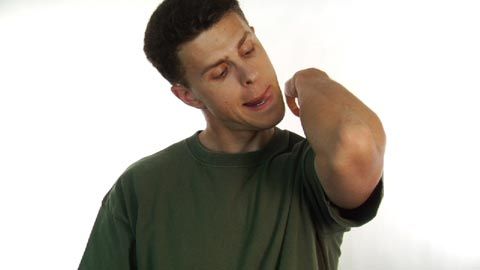
You’ve felt it before: the inexplicable tingling sensation that accompanies the dull pain from accidentally bumping an elbow. Orthopedic surgeon Norman K. Poppen, M.D., explains to surprised patients that this phenomenon, known commonly as hitting the “funny bone,” actually isn’t caused by any bone at all.

Norman K Poppen MD - Funny bone - Image Source: http://images.agoramedia.com/everydayhealth/gcms/colorful-pain-syndromes-09-pg-full.jpg
Norman K. Poppen MD  Image Credit: agoramedia.com

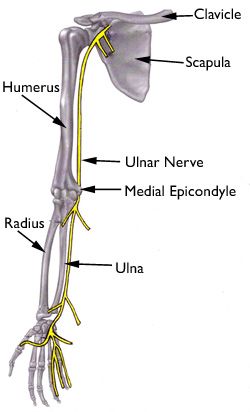
There is a nerve known as the “ulnar nerve” which runs alongside the ulna bone— one of the two slim bones that connect the elbow to the wrist. Studies of the human anatomy have found that the ulnar nerve is the longest nerve in the entire human body that is naturally unprotected by either muscle or bone. As such, the body tends to feel impact or injury on this nerve more often and more intensely than on any other.

Norman K Poppen MD - Ulnar nerve - Image Source - http://orthoinfo.aaos.org/figures/A00069F01.jpg
Norman K. Poppen MD  Image Credit: orthoinfo.aaos.org

To help curious patients understand further, Norman K. Poppen, M.D., demonstrates that the ulnar nerve is directly connected from the elbow to the pinky, or little finger, and even connects to the ring finger. This explains why, although only the elbow has been struck, the tickling sensation we feel seems to run up our arms and all the way to our fingertips.

The “funny bone” reference is a pun based on the homophonic resemblance of the word “humorous” to the upper arm bone called the Humerus. It is the impact to the elbow joint connected to the Humerus bone that creates the prickly sensation most people would describe as unpleasant. Knowing this, perhaps the occurrence should be renamed, and be referred to bumping one’s “not-so-funny bone” instead.

Norman K Poppen BD - Elbow - Image Source: http://a.images.blip.tv/TitanArts-NotFunnyBone404.jpg
Norman K. Poppen MD  Image Credit: a.images.blip.tv

Read more about Norman K. Poppen, M.D., on this website.